


- Research platform
Sources of information
Data analysis
Actions

- Solutions
For whom
Problems / Issues

- Materials
Materials
- About us
About us
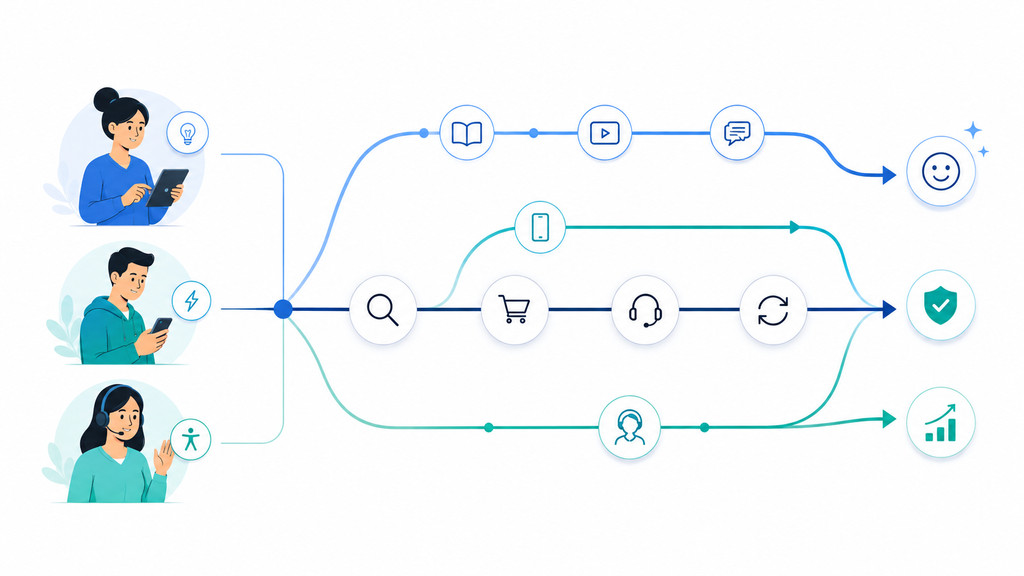
Customer journey personalization creates more relevant, flexible experiences by adapting content, guidance, service, timing, channels, and next steps to customers’ needs, preferences, intent, and context. For diverse audiences, the goal is not a separate journey for every person. It is to design inclusive options that reduce effort, preserve choice, and respond to meaningful differences in customer circumstances.
The strongest approach combines needs-based segmentation, adaptive journey mapping, cross-channel continuity, accessible design, customer-controlled preferences, and measurement that examines fairness as well as performance.
Customer journey personalization adapts a customer’s experience across multiple interactions and journey stages. Adaptations may include:
This is broader than adding a name to an email or showing different advertising to demographic groups. A personalized journey responds to what the customer is trying to accomplish. A first-time buyer may need education and reassurance, while a returning customer may want to skip introductory content. Someone troubleshooting a complex issue may need a specialist, even if they usually prefer self-service.
| Approach | How it works | Strengths | Risks |
|---|---|---|---|
| Static personalization | Provides predefined experiences for fixed segments, such as new customers or loyalty members | Easier to implement and govern; useful for predictable needs | May become inaccurate as circumstances change |
| Adaptive personalization | Responds to behavior, intent, lifecycle stage, preferences, device, urgency, and recent interactions | More relevant to the current situation | Requires stronger data, decision rules, testing, and safeguards |
Effective personalization does not change everything for everyone. It changes the parts of the experience that should vary while maintaining a dependable service baseline. Done well, it can reduce effort, improve relevance, strengthen engagement, and help service teams focus human attention where it is most valuable.
Friction often results when reasonable operational decisions are applied too rigidly:
These problems can occur throughout the journey. Generic comparisons may not address customer priorities; inflexible checkout terms can cause abandonment; insufficient onboarding guidance can lead to failed setup; and rigid support paths can increase effort.
The “average customer” is useful as a planning abstraction but is a poor design target. Customers differ in goals, urgency, language, ability, device access, digital confidence, prior knowledge, and expectations. They also change over time: the same person may want detailed guidance for one task and a shortcut for another.
Irrelevant or inaccessible journeys can lead to:
Personalization is therefore not only a marketing activity. A campaign promising simplicity cannot compensate for a complicated checkout or fragmented support experience. Tailored guidance can prevent avoidable contacts, route simple requests to self-service, direct complex cases to skilled employees, and preserve context across channels.
The key question is not whether an experience feels personalized internally. It is whether customers can complete meaningful tasks with less effort and greater confidence.
Age, gender, location, ethnicity, and other demographic characteristics may provide context, but they do not automatically predict needs or preferences. Two customers in the same demographic group may differ in product knowledge, urgency, accessibility needs, or channel preference.
Demographics become risky when used as shortcuts for behavior. A better principle is: segment by customer need and intent, not by stereotype.
Useful segmentation may draw on:
Not every signal belongs in every decision. A device may influence page design or content length, but should not automatically determine access to a human representative. A previous channel choice may indicate a preference without becoming a permanent label.
Use a signal only when it is relevant to the experience being changed. Otherwise, the organization may add complexity without creating value.
Actionable segments describe meaningful differences in the experience customers need:
Each segment should change a message, support option, content format, decision path, or next step. If it changes nothing operationally, it may not be an actionable segment.
Progressive profiling gathers only the information needed for the next useful interaction and learns more over time. For example, an organization might ask for language during account setup, communication preferences after purchase, and support preferences when a service need arises.
This reduces form fatigue and avoids requesting information without an immediate purpose. The principle should apply across channels: customers should not repeatedly provide the same preference or explain the same issue when moving from website to chat, chat to phone, or sales to service.
Analytics can show that groups behave differently but may not explain why. Interviews, surveys, usability testing, service conversations, complaint analysis, and Voice of Customer data can reveal the underlying goal or barrier.
For example, mobile abandonment may reflect poor performance, limited bandwidth, difficult data entry, or a preference for employee assistance. Each cause requires a different response. Revisit segments as behavior, products, policies, and expectations change.
Traditional maps often show awareness, consideration, purchase, onboarding, support, and loyalty as a neat sequence. Customers may instead skip discovery, return to consideration, repeat onboarding after failed setup, move between digital and assisted channels, contact support before purchasing, or need service recovery after a broken promise.
Adaptive journey mapping documents these routes and compares intended journeys with actual behavior. It identifies where customers need different content, pacing, channels, or assistance.
Discovery: Adapt educational content to the customer’s problem, interests, and awareness level. Experienced customers may need specifications; those exploring a problem may need plain-language guidance.
Consideration: Provide relevant comparisons, proof points, product guidance, and expert assistance. Make trade-offs visible rather than presenting unexplained recommendations.
Purchase: Simplify checkout, clarify costs and terms, and support appropriate payment, device, language, and assistance options.
Onboarding: Adjust instructions, pace, format, and guidance. Offer a quick-start route for confident customers and structured help for complex implementations.
Support: Route customers to self-service, chat, phone, community, or specialist help based on the issue, prior attempts, urgency, and stated preference. Customers who have already failed self-service should not be sent through the same article repeatedly.
Retention: Use useful reminders, proactive assistance, renewal guidance, and loyalty experiences that reflect the customer’s relationship and product use. Avoid technically relevant but mistimed or excessive messages.
Advocacy: Invite feedback, reviews, referrals, or case-study participation according to engagement and trust. Customers recovering from a service failure should receive recovery before an advocacy request.
Relevant context may include:
Define rules for when an experience should remain automated, become assisted, or move to a specialist. Repeated failed attempts, high-impact account issues, or sensitive requests may warrant escalation. Every rule needs a fallback so customers do not become trapped in an unsuitable automated route.
Personalization may affect navigation, recommendations, search results, content depth, and calls to action. Inclusive design should support readable language, captions, keyboard navigation, appropriate contrast, text resizing, and adjustable display settings.
Design for mobile devices, slower connections, and different levels of digital confidence. A lightweight page and clear task sequence may be more useful than an elaborate interface.
Adapt content, timing, frequency, language, and channel based on stated preferences and meaningful engagement. Behavioral triggers can still feel intrusive, mistimed, or irrelevant, so use them carefully.
Preference controls should let customers pause, reduce, or change nonessential communications without disabling essential account or service updates.
Give sales and service employees relevant context, including journey stage, previous questions, preferences, and unresolved barriers—but not unnecessary or sensitive information.
When customers move from self-service to sales or support, preserve useful context. Continuity is part of personalization; customers should not have to restart the conversation when the channel changes.
Offer meaningful choices among self-service, live chat, phone, email, community, and specialist support where practical. Personalize troubleshooting using product ownership, previous attempts, issue type, and customer capability.
Personalization should improve resolution, not merely route customers away from employees. Monitor repeat contacts, transfers, escalations, and customer effort to evaluate routing rules.
Translated or localized content can improve comprehension and trust when it reflects how customers use language. Consider terminology, date formats, currencies, examples, and communication norms.
For high-impact content such as contracts, safety information, financial terms, or service recovery messages, use professional translation or qualified review rather than relying solely on automated translation.
Build accessibility into websites, apps, documents, products, and support channels. Support screen readers, captions, keyboard navigation, sufficient contrast, text resizing, and alternative formats as appropriate.
Testing with people who have different abilities is essential. Accessibility affects journey quality as well as compliance: customers unable to complete tasks independently experience greater effort and may become more dependent on service teams.
Provide lightweight pages, low-bandwidth options, downloadable instructions, and offline alternatives where relevant. Use plain language and progressive disclosure for complex tasks.
When self-service becomes a barrier, make human assistance visible and easy to access. Difficulty or unwillingness to use a digital route should not automatically be treated as low engagement.
Personalization can harm customers when it limits choices, hides important information, or creates unequal access. Maintain a consistent baseline experience, then layer relevant options on top.
Review whether segments receive different quality levels, wait times, prices, support routes, or information. A tailored experience is not inclusive if it quietly narrows opportunity for some customers.
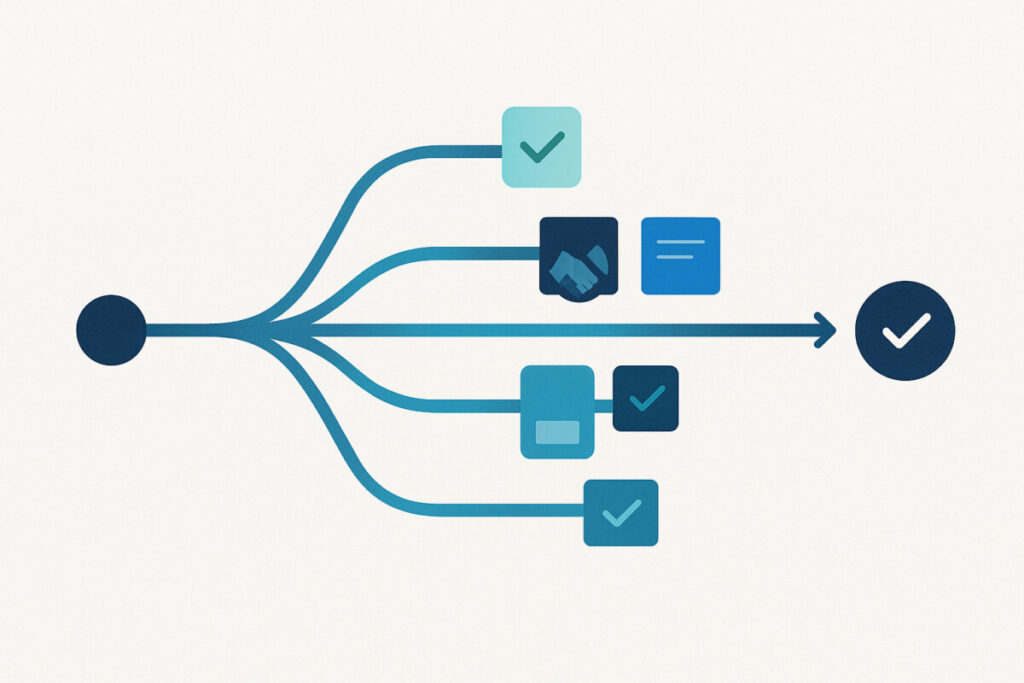
A useful preference center may allow customers to manage:
Keep controls easy to find and update. Distinguish marketing preferences from essential account, security, or service communications.
When useful for trust, explain why a customer is seeing a recommendation, message, or support route. Customers should be able to correct inaccurate information and turn off nonessential personalization. Control must be practical rather than buried in complicated settings.
Choices may include self-service or human support, alternative formats, communication channels, payment methods, or communication styles. Do not present options that are technically available but difficult to discover or use.
Responsible personalization begins with relevance and restraint. Prioritize first-party data customers knowingly provide or generate through clear interactions. Collect information for a defined purpose, minimize sensitive data, and restrict access appropriately.
Consent and preferences should remain connected across websites, apps, email, sales, and service systems. Honor opt-outs promptly and avoid uses customers would reasonably find surprising.
Review personalization rules for proxy discrimination, exclusion, and unequal treatment. Avoid inferring sensitive traits when unnecessary. High-impact decisions or recommendations may require human review when automated rules could materially affect access, eligibility, or service quality.
The central trade-off is relevance versus privacy. The best experience uses enough appropriate data to reduce effort while remaining understandable and proportionate.
Identify the customer’s task, motivation, barrier, urgency, and desired outcome. Begin with the customer problem, not the data available.
Combine declared preferences, behavior, feedback, service data, and journey analytics. Examine quantitative patterns alongside qualitative explanations.
Select the appropriate content, channel, support level, accessibility option, and next step. Make the adaptation specific enough to implement and evaluate.
Define when the journey adapts, remains consistent, or involves a human. Include rules for repeated failure, sensitive situations, and conflicting signals.
Apply consent, privacy, accessibility, fairness, frequency, and data-retention controls. Document fallback options.
Track relevance, effort, satisfaction, completion, resolution, retention, trust, opt-outs, and differences across segments.
Before launching a personalization rule, ask:
Automate predictable tasks while preserving human help for complex or sensitive needs. Maintain service consistency with meaningful variation, and begin with a manageable number of actionable segments.
Needs change by task, lifecycle stage, and circumstance. Review segments and preferences regularly.
A relevant campaign cannot compensate for confusing checkout, weak onboarding, or fragmented support. Extend personalization into the operational journey.
Use observed behavior, declared preferences, lifecycle context, and feedback. Test whether the adaptation improves outcomes for the intended audience.
When context does not travel across channels, customers repeat information and receive contradictory messages. Connect relevant data while respecting consent, privacy, and access controls.
Conversion may improve while effort, trust, accessibility, or service quality declines for a smaller segment. Use broader measures and investigate distributional differences, not only averages.
Core measures may include:
Compare outcomes across language, accessibility, device, lifecycle, intent, and needs-based segments. Monitor completion, abandonment, wait time, escalation, resolution, and access to support options.
Use A/B tests, holdout groups, usability testing, and journey analytics where appropriate. Test both the personalization rule and its underlying assumption. Qualitative feedback can explain why a tailored experience succeeded or failed.
Measurement should be cross-functional. Marketing, product, CX, service operations, analytics, privacy, and accessibility teams need shared ownership of data quality, journey rules, customer outcomes, and risk reviews. Establish escalation criteria for experiences that are harmful, confusing, inaccessible, or discriminatory.
Prioritize high-volume or high-value journeys with abandonment, repeat contacts, low satisfaction, poor resolution, or accessibility issues. Combine operational data with customer feedback and Voice of Customer evidence.
Connect relevant preference, behavioral, lifecycle, and service data. Resolve identity, consent, data-quality, and ownership gaps before expanding personalization.
Start with clear use cases such as onboarding guidance, support routing, communication preferences, or alternative content formats. Define the baseline, adaptation rules, safeguards, and success measures.
Include customers with different languages, abilities, devices, digital confidence levels, and support needs. Look for exclusion, confusion, repeated effort, and unequal outcomes.
Document data sources, rules, fallback options, review dates, and accountable owners. Expand only when pilots improve relevance without unacceptable privacy, accessibility, or fairness risks.
It adapts content, guidance, channels, support, timing, and next steps across the customer lifecycle using relevant needs, preferences, behavior, intent, and context.
Use needs-based segmentation, declared preferences, behavioral evidence, lifecycle context, accessible design, channel choice, and continuous testing. Do not assume demographic characteristics determine customer needs.
Generic journeys overlook differences in intent, language, ability, device access, digital confidence, urgency, and support preferences. Rigid paths can increase abandonment, effort, repeat contacts, and distrust.
Use direct preferences, observed behavior, current lifecycle context, and progressive profiling. Explain personalization where appropriate, give customers control, and review rules for bias and unequal outcomes.
Relevant first-party data may include preferences, behavior, lifecycle stage, purchase history, intent, service history, device context, and voluntarily provided accessibility requirements. Collect only what supports a defined purpose.
Measure conversion and engagement alongside customer effort, satisfaction, task success, retention, resolution quality, opt-outs, accessibility-related completion, privacy concerns, and differences across audience segments.
Customer journey personalization helps businesses move beyond generic experiences without reducing customers to narrow labels. The objective is not a different journey for every person, but a flexible set of inclusive paths that responds to differences in need, intent, context, and capability.
Start with high-friction journeys. Segment by meaningful customer needs, map the routes customers actually take, make choices visible across channels, and use feedback to identify where personalization reduces effort—or creates barriers.
With responsible data use, accessible design, clear governance, and measurement that includes fairness, tailored experiences can become more relevant for customers and more effective for the organization.
Copyright © 2023. YourCX. All rights reserved — Design by Proformat
