


- Research platform
Sources of information
Data analysis
Actions

- Solutions
For whom
Problems / Issues

- Materials
Materials
- About us
About us
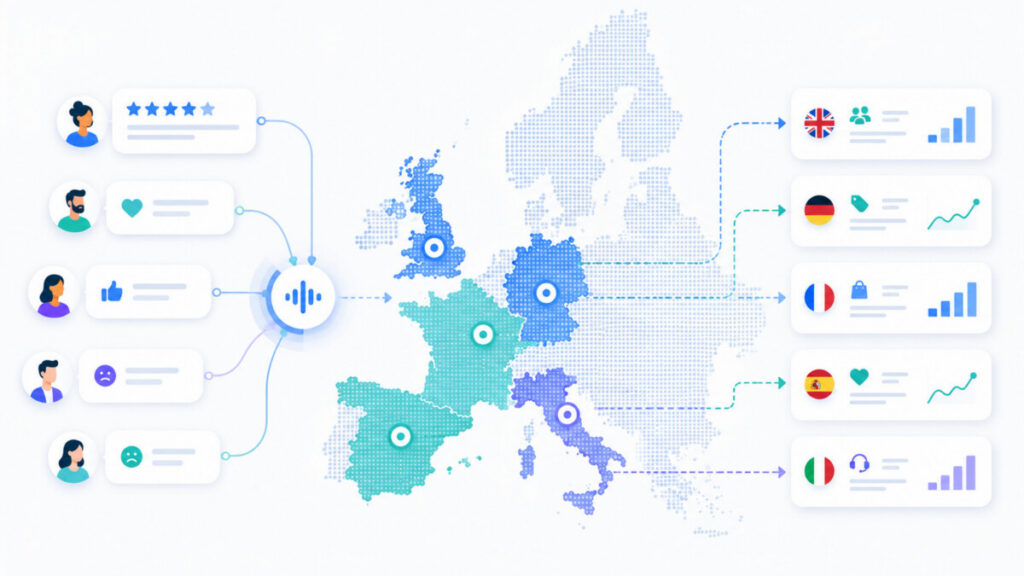
Organizations targeting European growth can't afford to treat Voice of Customer (VoC) as a one-size-fits-all discipline. In Europe, customer experience hinges on localization—linguistic, cultural, and operational—but data privacy is non-negotiable. This creates a unique CX challenge: deliver localization-informed VoC while maintaining strict GDPR compliance. Success means adapting feedback collection and analysis for Europe’s diversity, building customer trust, and translating insights into action—all without stumbling over regulatory pitfalls.
VoC is not simply about gathering opinions. In Europe, it’s a discipline for surfacing—and localizing—the subtle drivers of satisfaction, trust, and loyalty across markets as different as Finland and Spain. The challenge? Preferences, behaviors, and expectations can shift dramatically from region to region.
Strong European brands treat VoC as an engine for adaptation, not a box-checking exercise. Leading programs rely on localized feedback to recalibrate digital product features in France, tune retail experiences in Germany, or adjust service recovery protocols in Italy. A singular, pan-European approach rarely delivers actionable insight: a customer journey map based on UK feedback will likely misfire in Poland or Portugal.
Real-world impact: When organizations localize their VoC, they detect market-specific pain points—such as unmet local service expectations or communication gaps—before they snowball. For example, a ride-sharing platform that collects city-specific driver feedback is able to adapt its onboarding, support, and safety communications to fit both cultural nuance and legal context. By contrast, translating existing surveys into multiple languages without cultural contextualization typically yields misleading, low-action data.
The General Data Protection Regulation is not an abstract risk in Europe; it's a daily operational reality. GDPR requirements cut to the core of VoC operations by dictating how, when, and why customer data can be collected and used.
Core GDPR principles affecting VoC:
Critical GDPR Articles impacting feedback:
Penalties: Fines for severe GDPR breaches can reach up to 4% of annual global turnover, with VoC-related missteps usually landing in the mid-range but still costly—both financially and for brand reputation.
Effective localization starts long before translation. Cultural context determines not just how questions are worded but also what is asked, when, and through which channels.
Does this add complexity? Absolutely. But it’s a prerequisite for actionable data. Unlocalized VoC surveys create friction, stifle response rates, and often bias results—defeating the core CX purpose.
Channel choice is as strategic as content. Email surveys may drive strong results in Benelux countries but underperform in Mediterranean markets, where SMS, WhatsApp, or even in-product prompts win out.
Key considerations:
Localized channel mix is not an afterthought. The optimal feedback cadence and mechanisms are defined as much by local digital culture and legal constraints as customer journey design.
Consent is not a checkbox—it’s a documented, auditable process. For any identifiable customer feedback, organizations should:
Privacy notices should meet local expectations for clarity—localized both linguistically and legally. Vague or solely English-language notices are high risk.
For lean, compliant VoC:
The temptation to over-collect “just in case” often backfires under regulatory scrutiny.
Feedback is customer data. Treat it with the same rigor as user accounts or transaction records.
Modern platforms provide detailed access granularity, but it remains the organization’s duty to configure, test, and document access controls.
Every organization wants deeper insight—until compliance teams push back. The art is in gathering enough to drive change, yet not so much that legal exposure spikes. Pushback from GDPR officers is predictable when localization leads to data creep.
Mature organizations pilot VoC approaches and adjust granularity according to demonstrated business value—not default collection maximalism.
When localization or compliance proves especially tangled, operational constraints must be documented—not bypassed. Cross-functional governance is a practical necessity here.
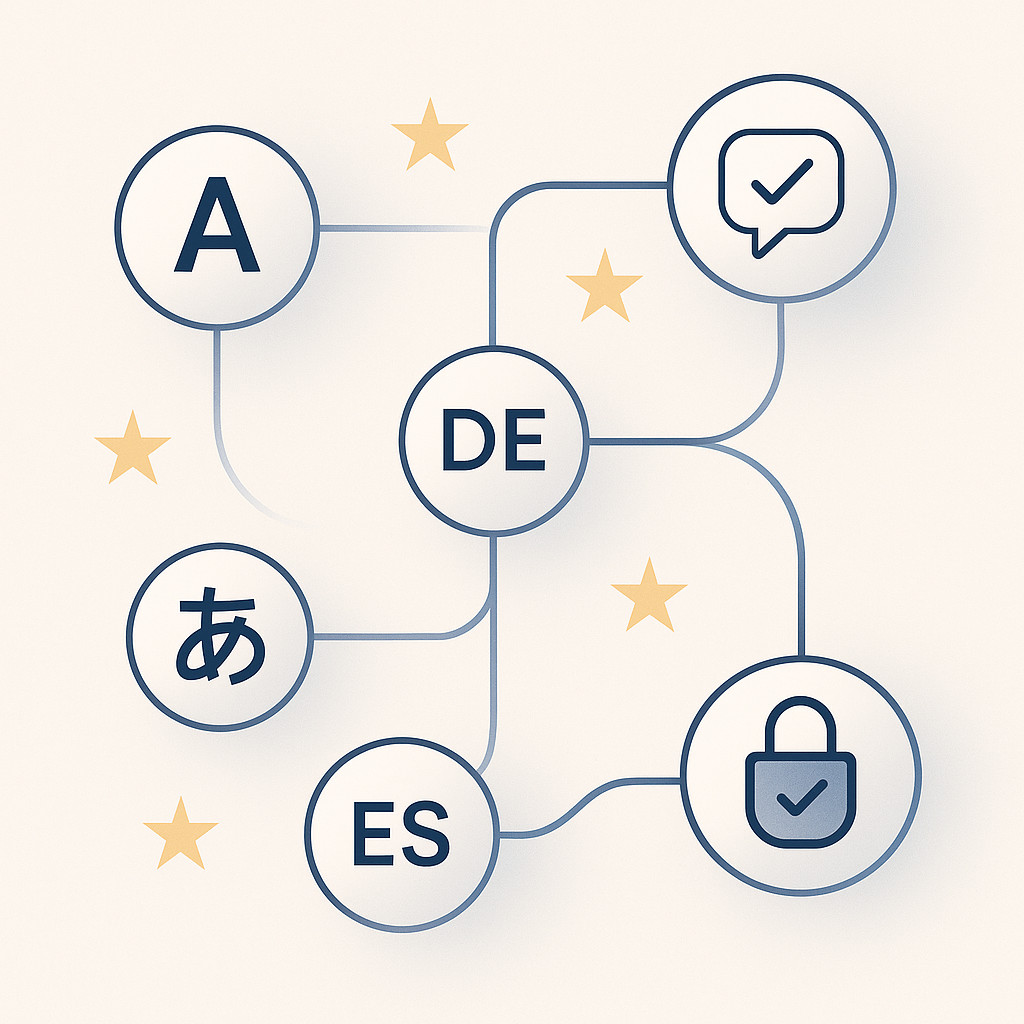
Aligning CX, compliance, and operational realities requires a clear sequence. Use the following as a starting point:
| Step | Action | Rationale/Checkpoint |
|---|---|---|
| 1 | Stakeholder alignment | Involve CX, marketing, legal, IT, and local market leads early. Prevents rework or missed risk flags later. |
| 2 | Feedback objective scoping | Define exactly what you want to measure and why—for each market. Tie data fields to these objectives. |
| 3 | Channel & content localization | Select feedback channels and adapt content for each market. Validate via local advisors or pilot testing. |
| 4 | Consent & notice design | Draft (and translate) clear consent text and privacy notices. Legal review is mandatory. |
| 5 | Platform/tool selection | Ensure VoC technology supports: multi-language interfaces; customizable consent logic; data minimization; EEA data residency. |
| 6 | Data minimization & retention setup | Pre-configure data flows and retention policies in your tools. Test deletion, export, and access requests end-to-end. |
| 7 | Staff training | Train all market- and HQ-level VoC operators on both localization nuances and GDPR compliance procedures. |
| 8 | Pre-launch audit | Run a formal checklist-based review before going live in each market. Document for compliance defense. |
| 9 | Post-launch monitoring | Establish regular checks on consent logs, data flows, and response rates by market/channel. |
| 10 | Continuous improvement loop | Iterate as feedback evolves—and as regulation or best practices shift. Include annual process audits. |
Platform selection criteria should include:
Staying compliant is not a one-off milestone. As privacy regulation, customer expectations, and technology shift, so too must your VoC operations.
Organizations that treat privacy as an integral part of their CX brand, rather than as mere legal compliance, stand out—especially in markets where skepticism and data breach fatigue run high.
Voice of Customer (VoC) refers to structured, ongoing collection and analysis of customer feedback—surveys, interviews, complaints, and behavioral data—used to inform better service and product decisions. In Europe, VoC localization is critical because each market has distinct cultural, linguistic, and regulatory realities. Without precise local adaptation, VoC data becomes less actionable and may actually misguide strategy.
GDPR establishes strict conditions for gathering, storing, and using any personal feedback data in Europe. Consent must be explicit and well documented. Only essential data can be collected, and customers have rights to access, delete, or correct their information. Feedback programs must provide clear privacy notices, allow opt-outs, and control data retention times tightly.
Frequent errors include directly translating US-designed surveys; neglecting local privacy laws or cultural norms; over-collecting demographic or behavioral data without clear justification; relying on non-compliant feedback platforms; or tacking on GDPR compliance late, rather than building it into VoC process design from the outset.
Look for platforms designed with “privacy by design,” including features like: multi-language survey builders, EEA-based data storage, granular consent logic, flexible privacy templates, and strong role-based access controls. Leading CX suites and some specialized survey tools offer these, but always vet their data flows and local compliance claims.
A minimum of biannual process and tool audits is recommended—with additional reviews when launching in new markets, after regulatory changes, or following significant updates to survey instruments, data flows, or supporting technology.
Yes. While anonymized data forfeits some segmentation power, it still reveals broad patterns, journey pain points, and systemic issues. Many organizations use a hybrid approach: collect actionable, lightly identified data only where strictly necessary, and anonymize or aggregate feedback elsewhere to reduce compliance and reputational risk.
Key Takeaways
Carefully localized and privacy-first VoC is not the easy way out—but in Europe, it’s the only way to meaningful market impact and long-term customer trust.
Copyright © 2023. YourCX. All rights reserved — Design by Proformat
