


- Research platform
Sources of information
Data analysis
Actions

- Solutions
For whom
Problems / Issues

- Materials
Materials
- About us
About us
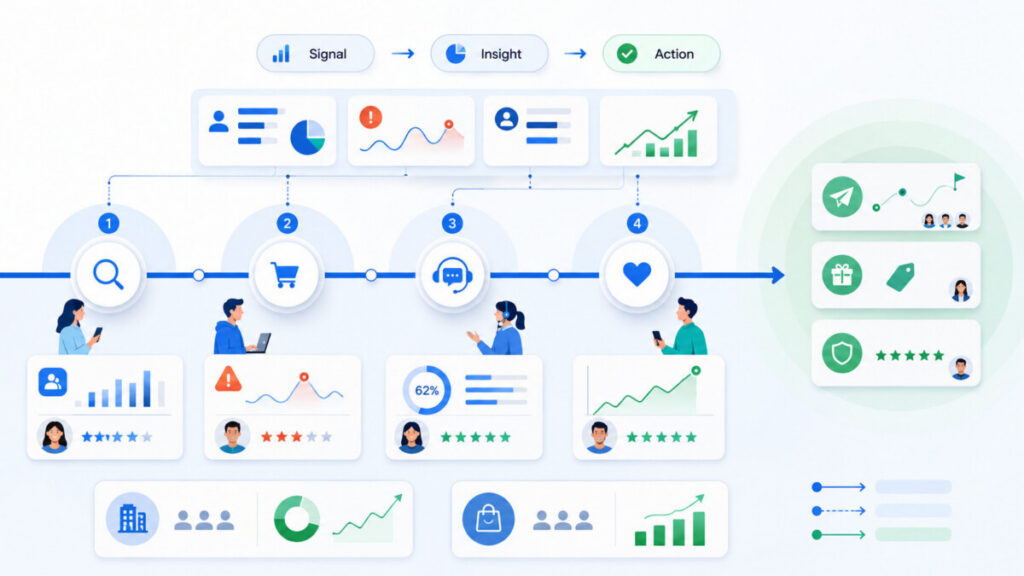
AI-driven customer experience (CX) is no longer experimental—it's a proven lever for deepening customer engagement, optimizing journey touchpoints, and achieving measurable business gains. By embedding artificial intelligence at critical journey stages, organizations can deliver hyper-personalized, emotionally intelligent, and continuously adapting experiences that outperform traditional approaches. This article goes beyond the hype, detailing actionable best practices for integrating AI in CX, unpacking the key strategies behind real business wins, and offering expert insight into operationalizing customer journey optimization at scale.
Recent advances in AI have brought a fundamental reshaping of how organizations approach customer experience. The core AI applications in CX include:
The drive to adopt AI in customer journey optimization stems from customer expectation shifts—personalization is no longer a "nice-to-have" but a baseline requirement. Competitive dynamics also pressure brands to act on real-time insight, not lagging indicators.
AI’s Distinct Value in Journey Optimization
Where legacy CX methods focus on static personas and post-hoc feedback, AI in CX empowers organizations to respond to live signals and personalize journeys as they unfold.
AI’s ability to personalize customer experiences is now foundational for best-in-class CX programs. But what distinguishes successful AI efforts is not just automated recommendations—it’s the orchestrated use of real-time behavioral analytics, next-best-action engines, and dynamic content strategies across channels.
When personalization is driven by live data and refined continuously, customers report higher satisfaction and relevance. Key outcomes from effective AI personalization include:
Advanced organizations also link personalization models to Customer Lifetime Value (CLV) optimization, focusing on interventions that drive long-term loyalty, not just the next click.
A humanized experience goes beyond logic; it responds to feeling. The next evolution of customer experience AI integrates emotional intelligence—detecting, interpreting, and responding to sentiment and intent at scale.
Contact center AI, for example, flags escalating anger in a chat and routes the interaction to a skilled agent—or suggests a tailored empathetic script. Retail chatbots can recognize when a customer is “just browsing” versus urgently seeking assistance, shifting response pace and tone accordingly.
Emotionally intelligent AI systems don’t supplant human empathy, but they dramatically scale it. They enable:
Brands that master this domain are seeing material increases in loyalty, NPS, and brand advocacy—outcomes that are notoriously difficult to buy with incentives alone.
Traditional journey mapping is static, infrequently refreshed, and limited in practical value once customer needs shift. AI transforms mapping from a one-off diagram to a dynamic, constantly adapting model.
When journey analytics highlight a spike in drop-off after a new feature launch, for example, an AI model can trigger targeted communications or interventions, segmenting customers by pain threshold or risk of churn and deploying tailored solutions.
Brands that operationalize dynamic journey mapping typically see:
Operationalizing AI in customer experience demands more than model deployment. The difference between leaders and laggards lies in their execution approach.
AI in CX fails when data is siloed, outdated, or incomplete. Invest in:
The most effective AI initiatives break down silos between CX, IT, analytics, and the lines of business. Joint ownership ensures:
AI models should not be "set and forget." High-performing CX teams:
Success in AI-powered customer experience is rooted in strong operational discipline. Below is a pragmatic step-by-step framework—use this as a high-level checklist to structure your initiative.
| Step | Action Items | Key Risks to Mitigate |
|---|---|---|
| 1. Assess Readiness | Map current CX pain points, data maturity, AI talent | Overreaching before basics in place |
| 2. Integrate Data | Link journey, operational, and feedback data. Ensure quality and recency | Siloed or poor-quality data |
| 3. Select AI Technology | Based on journey priorities: NLP, recommendation engines, analytics engines, etc. | Misaligned tools, vendor lock-in |
| 4. Define KPIs & Goals | Tie to business impact: NPS, CSAT, churn, CLV, etc. | Fuzzy objectives, vanity metrics |
| 5. Pilot and Iterate | Small-scale implementation, rapid feedback, adjust models | Overbuilding before proof of value |
| 6. Change Management | Train staff, align incentives, set escalation paths for exceptions | Resistance, poor handoffs |
| 7. Measure & Refine | Continuous monitoring, closed-loop feedback, update models with new data | Static models, model drift |
| 8. Ethics & Privacy | Conduct ethical reviews; build in explainability, data consent, and compliance checks | Bias, privacy breaches, compliance |
A careful approach reduces the risk of poor adoption, biased outputs, and damaging customer trust.
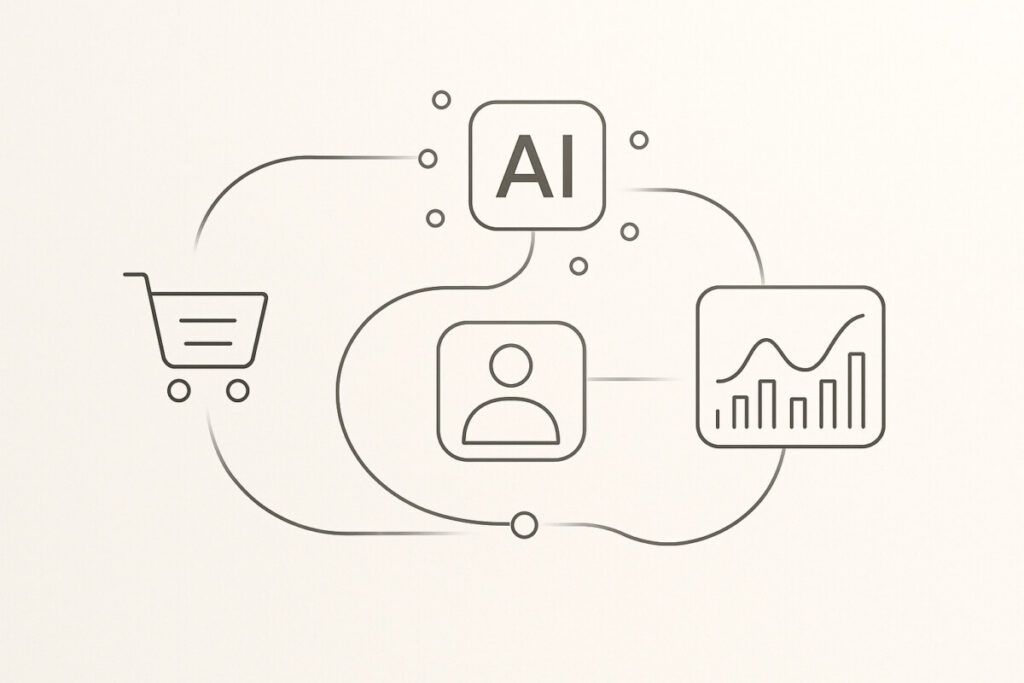
Adopting AI for CX is not risk-free. Execution gaps routinely blunt the expected impact.
The lesson: AI in CX succeeds where deployment is holistic—spanning journey mapping, emotional context, human support, and ongoing governance.
A global retailer integrated AI-powered recommendation engines with real-time VoC analytics. By personalizing homepage content and promotional offers based on browsing and feedback data, they recorded a sustained uplift in NPS and a double-digit reduction in cart abandonment. The repeat purchase rate also climbed, attributed to more relevant “next-best-action” nudges.
A regional bank deployed sentiment analytics across chat and call center channels. When negative sentiment was detected, calls were routed to experienced agents and sentiment-specific resources dispatched. Result: measurable reduction in complaint escalations and a notable increase in CSAT, particularly among high-value customer segments.
A telecom provider invested in real-time journey analytics and AI-driven churn prediction. Customers at risk of leaving, as identified by usage patterns and survey data, received personalized retention offers and expedited support. The initiative led to a significant decrease in churn and higher lifetime value among previously “at risk” cohorts.
AI analyzes real-time behaviors, feedback, and touchpoint data to identify where customers struggle or disengage. It enables proactive interventions—such as targeted messaging, routing, or offers—to personalize and smooth each stage of the journey. The result is faster issue resolution, reduced drop-off, and a more relevant, adaptive experience.
Yes. Retailers have used AI to boost NPS and conversion via hyper-personalized recommendations. Banks have deployed sentiment analysis to improve escalations, driving up CSAT. Telecom companies have used churn-prediction models to lower attrition and raise customer lifetime value. In all cases, the common success factors include combining behavioral and emotional data, agile iteration, and linking AI outputs to business metrics.
Blend automated, emotion-aware triage (e.g., AI chatbots that recognize sentiment) with seamless escalation paths to experienced human agents for complex or emotionally charged issues. The goal is augmentation—using AI to support and amplify human empathy, not replace it.
Ensure transparent, ethical data management: secure consent, comply with privacy regulations, audit AI for bias, and explain decisions clearly to customers. Customer trust depends on knowing how their data is used and having control over their experience.
Track Voice of Customer metrics like NPS, CSAT, and sentiment; operational metrics like resolution time and completion rate; and business metrics such as churn, retention, and customer lifetime value. Continuous measurement, feedback loops, and transparent reporting are essential for demonstrating the tangible value of AI in CX.
Copyright © 2023. YourCX. All rights reserved — Design by Proformat
