


- Research platform
Sources of information
Data analysis
Actions

- Solutions
For whom
Problems / Issues
- Materials
Materials
- About us
About us
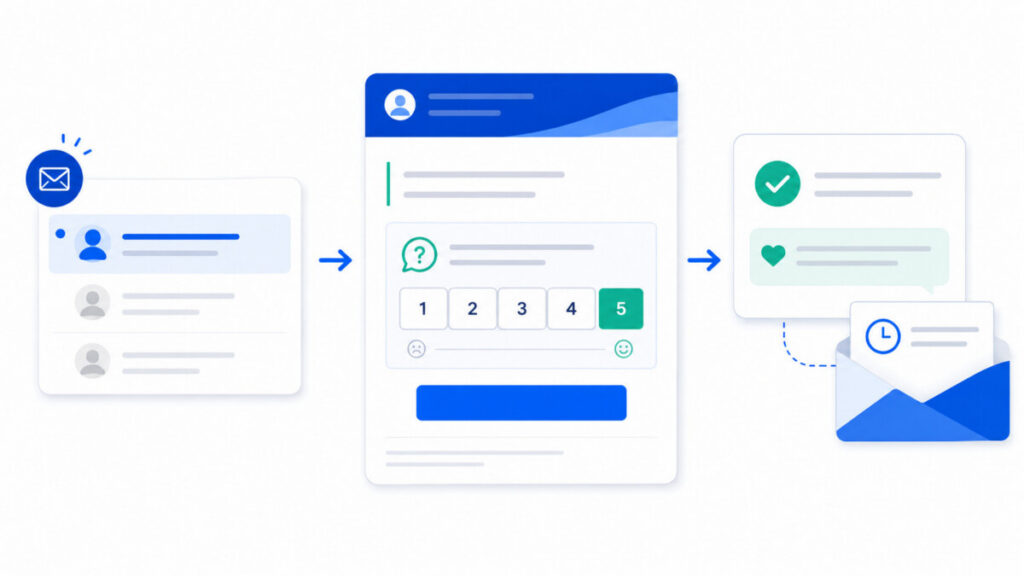
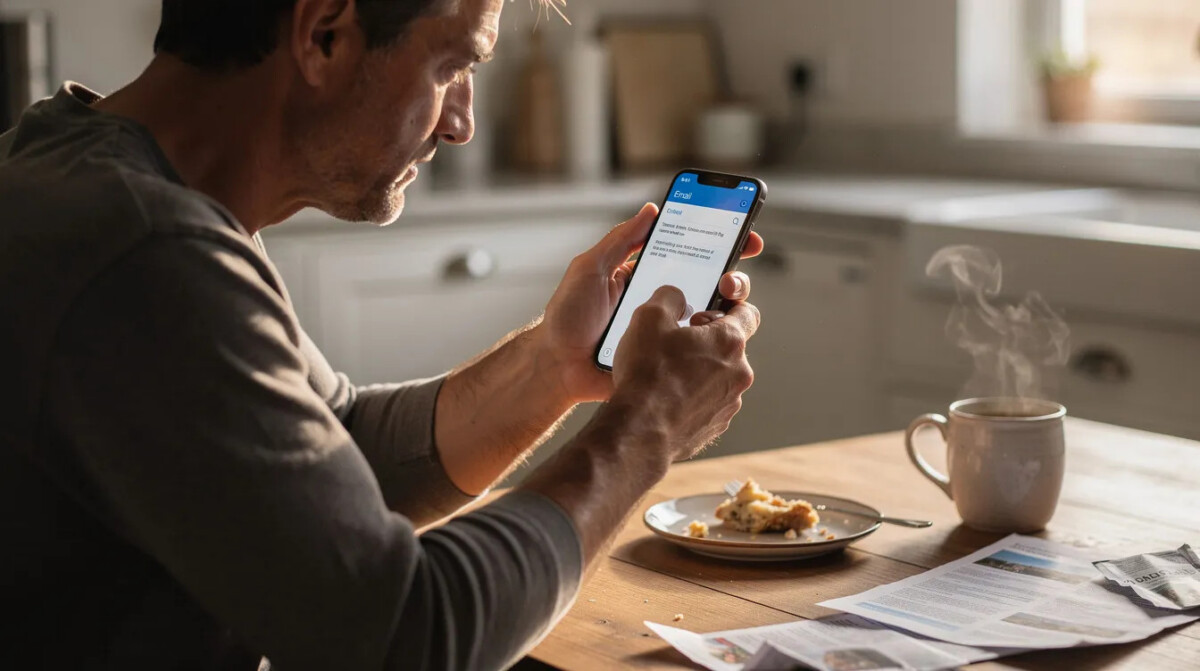
Even the perfect survey fails if customers never open the email that delivers it. The survey invitation email is where your Voice of Customer program lives or dies - and most teams treat it as an afterthought. This guide covers the full funnel, from subject line to completed response, with concrete best practices for NPS, CSAT, and CES survey emails.
You can spend weeks designing the ideal customer satisfaction survey - choosing the right metric, refining every question, perfecting the flow - and still collect almost nothing if the invitation email is weak. NPS surveys have a 12.4% response rate on average. That means roughly 88 out of 100 customers you contact never complete the survey, and for many programs, the email itself is where most of that drop-off happens.
The survey invitation email is the first touchpoint of the customer feedback experience. It determines who sees the request, who trusts it, who clicks, and who finishes. When survey invitations are vague, poorly timed, or indistinguishable from promotional noise, only the most extreme voices - very angry or very loyal customers - bother to respond. That creates nonresponse bias, and it means the survey results you base decisions on may not reflect your actual customer base.
A well-designed survey email reduces customer effort. It makes the ask obvious, the time commitment clear, and the purpose credible. It signals that answering the feedback survey is worth the customer's time and that the data will actually be used.
This article walks through step-by-step survey invitation email best practices to increase opens, clicks, starts, and completed responses - without resorting to clickbait, psychological tricks, or manipulative language.
A survey invitation email has one job: collect honest feedback. It is not a newsletter, a promotional campaign, or a product announcement. Conflating these formats is one of the most common mistakes CX teams make.
Key differences:
The best customer survey email feels like a natural continuation of the interaction the customer just had - not like a marketing blast from a different team.
Every survey invitation email passes through a measurable funnel:
Stage | Metric | What It Tells You |
|---|---|---|
Delivered | Deliverability rate | Whether your email reaches the inbox at all |
Opened | Survey open rate | Whether the subject and sender earn attention |
Clicked | Survey click-through rate | Whether the CTA or embedded question triggers action |
Started | Start rate | Whether the landing page matches expectations |
Completed | Survey completion rate | Whether the survey is short and relevant enough |
Commented | Comment rate | Whether respondents provide qualitative detail |
Dropped | Drop-off rate | Where in the process people abandon |
Complained | Unsubscribe / spam rate | Whether you are over-surveying or losing trust |
A high open rate paired with a low completion rate usually points to a problem in the survey itself - too long, mismatch with the email's promise, or a landing page that frustrates mobile users. A low open rate signals subject line, sender, or timing issues.
Do not optimize only for opens. A deceptive or vague subject line may boost open rate but will erode trust and reduce the quality of valuable data you collect.
Research consistently shows that 47% of recipients decide to open an email based on the subject line alone, and 69% of recipients use the subject line to determine whether a message is spam. Getting this right is non-negotiable.
The survey invitation subject line should be specific, honest, and tied to a real customer interaction. Aim for 30–40 characters for better mobile display, and keep subject lines under 50 characters for effectiveness. Personalized subject lines improve engagement rates further.
Strong survey email subject lines by type:
Weak survey email subject lines:
These fail because they are generic, company-focused, and give the customer no reason to care. Emails with clear subject lines see a 47% open rate - a significant advantage over vague alternatives.
Always validate winning subject lines on completion rate, not just opens. A/B test two subject lines per survey campaign and track which one delivers more finished responses.
Avoid exclamation points, ALL CAPS, and reward-heavy language that could trigger spam filters.
The preheader is the short text snippet visible in inbox previews alongside the subject line. It should complement the subject - not repeat it - by clarifying what the customer is being asked to do.
Strong preheader examples:
Including a recognizable sender increases the likelihood of the email being opened. A randomized study in EMS agencies found that surveys from a familiar sender achieved approximately 54% response rates versus 37% from an unfamiliar sender.
Sender name best practices: use a recognizable brand name plus team identifier - for example, "[Brand] Customer Experience Team" or "[Brand] Support Team." Avoid "no-reply" addresses and suspicious-looking domains for customer feedback emails.
When a partner like YourCX sends the invitation, the sender or reply-to line should clearly indicate the relationship - for example, "[Brand] via YourCX" - to maintain trust and avoid confusion.
Consistent sender identity across initial invitations and reminder survey emails improves inbox recognition and email survey response rate over time.
An effective survey email layout looks more like a concise transactional message than a colorful marketing newsletter. The structure should be: branded but lightweight header, a short intro paragraph, the first question or CTA visible near the top, and plenty of whitespace.
Only 39% of email users check inboxes on computers, and nearly 60% of surveys are completed on mobile devices. Use mobile-first design for emails and surveys: single-column layout, large tap targets, readable font sizes, high contrast, and fast-loading elements.
Key "don'ts" for email survey design:
Accessibility matters: include alt text for essential images, ensure color contrast meets readability standards, and make the survey landing page keyboard-navigable for screen readers.
Placing the first NPS, CSAT, or CES question directly inside the customer survey email is one of the highest-impact changes a CX team can make.
Instead of asking customers to click a generic "Take the survey" button and then see the first question, show the question in the email itself. The customer sees the scale, taps a score, and lands on a page where that answer is pre-filled and a follow-up open question is ready. Reducing friction in survey participation this way can enhance completion rates substantially.
A SurveyMonkey experiment with 8,876 emails found that embedding the first question increased click-through rate from 26.2% to 32.0% and overall completion rate from 24.4% to 29.1%. Embedding surveys in emails can increase response rates without biasing the scores.
Concrete examples by survey type:
Including a progress bar on the survey landing page can improve survey completion rates further, reinforcing that the entire survey is short.
Technical considerations: click tracking must reliably pass the selected value via URL parameters to the survey tool. The landing page should confirm the chosen answer. Test rendering across major email clients - some strip interactive elements, so degrade gracefully to a simple linked button.
Use a single prominent call-to-action button in the email. Using one strong call-to-action link or button for higher visibility keeps the message focused. Using a single prominent call-to-action button reduces click complexity and eliminates confusion about what the customer should do.
When the first question is embedded, each scale option becomes a CTA. When a single button leads to the survey, the button text should describe the actual action.
Strong CTA examples:
Weak CTA examples:
Place the CTA or embedded rating scale above the fold. If necessary, repeat once at the bottom, but never include multiple competing buttons or links within the same feedback request email. Design the button with sufficient contrast, adequate size for touch, and text that remains legible in dark mode.
A survey invitation email should be 3 to 5 sentences long. Keep survey invitation emails under 150 words to boost response rates. Short invitation emails with a clear structure perform better than long ones - every sentence should either clarify context, reduce effort, or build trust.
Recommended structure:
Clearly state the time commitment to participate in the survey. Surveys with a clear time estimate see higher completion rates, and providing a clear estimate of how long a survey will take can increase participation. Explicitly explain how the feedback will be used - responses are more frequent when the survey's purpose is clear and explained immediately in the email.
Example body for a support CSAT email:
"Hi, You recently contacted our support team. We'd like to understand how that experience worked for you.
How satisfied were you with the support you received? [Very dissatisfied] [Dissatisfied] [Neutral] [Satisfied] [Very satisfied]
After choosing a rating, you can add a short comment. It takes under a minute. Your feedback helps us improve the way we support customers."
Keep the tone neutral and non-leading. Phrases like "We want to understand what worked well and what needs improvement" normalize critical feedback. Never use guilt-based language or suggest that only positive feedback is welcome. Avoid overpromising - saying "This will take only 10 seconds!" when the survey actually takes two minutes damages trust and future survey response rate.
Personalized survey emails can increase response rates by 40%, and in another analysis, personalized survey invitations can increase response rates by 25%. Research shows that 89% of business leaders believe personalization influences success. Amazon achieves over 40% response rates with personalized surveys, demonstrating the power of relevance at scale.
Good personalization means referencing a specific interaction - the product purchased, the support ticket resolved, the delivery received. Using the recipient's name in emails boosts engagement significantly. But personalization involves referencing specific interactions with recipients, not dumping their entire purchase history into the email. Over-detailed or inaccurate personalization feels like surveillance and damages trust.
Timing guidance by survey type:
Survey Type | When to Send |
|---|---|
Post-support CSAT | Within 24 hours of issue resolution |
Delivery survey | After tracking confirms delivery |
Onboarding CES | After customer reaches first "value" event |
Post-purchase | 1–3 days after delivery |
Relationship NPS | Periodically, no more than 2–4 times per year |
Send transactional surveys within 24 hours of interaction for relevance. Send survey emails on Tuesday through Thursday for best results - SurveyMonkey's analysis found that Monday invitations produce about 10% more responses than average, while Friday invitations show roughly 13% fewer. Optimal sending time is mid-morning, 9–11 AM. Avoid sending surveys on Mondays and Fridays for higher engagement in most contexts, though you should test this with your own target audience.
Include a firm deadline to create urgency for survey responses - a reasonable closing date gives potential respondents a reason to act now rather than forget.
Segment your email survey invitations: different subject lines and copy for new versus long-term customers, B2B versus B2C, high-value accounts, or specific product lines. YourCX and similar CX platforms can trigger and segment survey email invitations based on behavioral data, helping ensure feedback is requested at relevant, non-intrusive moments.
Follow-up reminder emails for non-respondents can significantly improve response rates. Sending survey reminders can improve response rates significantly - but a well-timed reminder provides a friendly nudge, not pressure.
Limit reminders to one or two per survey campaign. A standard waiting time for reminders is 3 to 7 days after the first request. Follow-up reminders should exclude users who already completed the survey. Changing the subject line in follow-ups can create fresh appeal.
Reminder subject line examples:
Example reminder body:
"Hi, we recently asked about your experience with [event name]. If you have a moment, you can still answer one quick question here: [Answer the question]. Thank you for helping us improve."
Survey fatigue indicators to watch:
To prevent fatigue, set frequency caps, suppress customers who recently answered, and coordinate survey programs across departments. Do not send NPS, CSAT, and a market research survey invitation to the same customer within the same week. Listen4Good recommends limiting to 1–2 reminders and suppressing recent respondents.
Clear privacy handling is not just a legal checkbox - immediate assurance about response confidentiality encourages participation and improves feedback quality.
Key privacy practices for customer feedback emails:
Accessibility best practices for both the email and survey page:
Transparency and inclusive design make customers more willing to share candid, valuable feedback - and protect your organization from compliance risk.
Testing different versions of emails can yield better open and click-through rates. But test the full funnel, not just opens.
A simple A/B testing approach: randomly split invitations within the same customer segment and compare open rate, click rate, survey completion rate, comment depth, and unsubscribe rate. Limit surveys to less than 5–10 questions to prevent abandonment.
Common mistakes to watch for:
Create an internal checklist so CX and CRM teams can review every new customer satisfaction survey email before launch - the next section provides one.
Subject: How was your recent support experience? Preheader: Answer one quick question about your recent contact.
Hi {FirstName},
You recently contacted our support team about {TicketID}. We'd like to understand how that experience went.
How satisfied were you with the support you received?
[Very dissatisfied] [Dissatisfied] [Neutral] [Satisfied] [Very satisfied]
After choosing a rating, you can add a short comment. It takes under a minute and helps us improve the way we support customers.
Best regards, {Brand} Customer Experience Team
Subject: How likely are you to recommend us? Preheader: Your answer helps us understand your overall experience.
Hi {FirstName},
We'd like to understand how you feel about your experience with {Brand}.
How likely are you to recommend us to a friend or colleague?
[0] [1] [2] [3] [4] [5] [6] [7] [8] [9] [10]
You can also tell us what influenced your score. This quick survey takes about one minute.
Subject: How easy was it to resolve your issue? Preheader: One quick question after your recent request.
Hi,
Your recent request has been resolved. We'd like to know how easy or difficult the process was.
How easy was it to resolve your issue?
[Very difficult] [Difficult] [Neutral] [Easy] [Very easy]
Subject: Reminder: one quick question about your experience Preheader: Your feedback can still help us improve.
Hi,
We recently asked for your feedback about {experience}. If you still have a moment, you can answer one question here:
[Rate your experience]
Thank you for helping us improve.
Each survey email template above can be adapted for your specific context. Pay careful attention to matching the subject line, preheader, and body so the experience feels consistent from inbox to survey page.

YourCX is a CX and Voice of Customer platform that helps organizations design, send, and analyze NPS, CSAT, CES, and other customer experience survey programs across email and digital touchpoints.
YourCX supports flows where the first survey question is embedded in the email invitation and passed through to the survey, reducing friction and improving survey completion rate. Capabilities include journey-based triggers, segmentation, response tracking, comment analysis, and dashboards that show not just response volume but valuable insights for improvement.
For teams looking to maximize response rates and gather feedback that drives data driven decisions, YourCX acts as a partner for experimentation - helping test different survey invitation email templates, timing rules, and reminder strategies.
Technology cannot make customers care about a survey by itself. But a well-designed VoC platform such as YourCX can help teams reduce friction, trigger surveys at the right moments, and turn customer data into action.
Want to improve how you collect customer feedback? Explore how YourCX helps teams design effective survey flows, analyze responses, and turn feedback into better customer experiences.
Before sending any new email invitation, run through this checklist:
Subject and sender:
Email content and design:
Timing and fatigue:
Privacy and quality:
Set expectations with your team: review this checklist for every new customer feedback survey campaign.
A survey invitation email is not a minor operational detail. It is a visible, emotionally loaded touchpoint in the customer experience. When it is clear, trustworthy, short, mobile-friendly, and designed to reduce effort, more customers respond - and the feedback you collect is more representative and more useful.
The most impactful practices: specific subject lines, recognizable senders, embedded first questions, honest time expectations, mobile-first design, well-paced reminders, and transparent privacy handling.
Review your current NPS, CSAT, and CES survey emails against the checklist above. Run at least one structured A/B test in your next feedback cycle. Improving survey invitation emails is an ongoing process - and one of the most accessible levers for building a stronger, more trustworthy Voice of Customer program and driving business growth from customer insights.
Short, concrete answers to common practical questions for CX and VoC practitioners refining their email surveys.
A survey invitation email is a targeted message asking a specific customer to complete a customer feedback survey, typically after a key event such as a purchase, delivery, or support resolution. It is a survey request email sent to collect structured feedback like NPS, CSAT, or CES scores.
Email is preferable for more reflective relationship NPS surveys, post-service experiences that did not occur online, and when you need to reach targeted respondents such as decision-makers who are not active app users. In-app or on-site microsurveys work best for immediate, in-context feedback during digital sessions. Many VoC programs use both channels and coordinate them to avoid survey fatigue.
For most post-transaction CSAT or CES email surveys, aim for 2–5 questions. For NPS relationship surveys, the core NPS question plus 1–3 follow-ups is ideal. Beyond 7–8 questions, completion rates typically decline sharply, especially on mobile devices. Limit surveys to less than 5–10 questions to prevent abandonment.
A good practice: sample more customers with shorter surveys rather than surveying fewer people with long questionnaires. Separate deep market research survey questionnaires from always-on CX feedback surveys, and signal clearly in the invitation email when a longer survey is genuinely needed. If you use a new feature like a progress bar, it can help customers see how close they are to finishing.
In most CX contexts, one reminder - and at most two - is sufficient. Send reminders only to non-respondents and cancel them immediately once a response is recorded. Wait 3–7 days after the initial invite for post-purchase or support surveys, and up to 7–10 days for relationship NPS surveys where the feedback is less time-sensitive.
Additional reminders risk irritation, higher unsubscribe and spam complaint rates, and can bias the sample toward more tolerant or highly engaged customers. A well-crafted survey follow-up email should feel like a friendly nudge, not pressure.
Incentives involve trade-offs. They can increase participation for optional, longer, or market research surveys. Offering rewards can increase survey responses significantly - for example, Starbucks achieves 45% response rates with a $5 gift card incentive. Incentives can range from $5 for short surveys to $100 for longer ones, and small upfront incentives are more effective than post-survey rewards.
However, incentives may bias responses, attract reward seekers who provide low-quality answers, and raise costs for always-on CX programs. For short transactional CSAT, CES, and routine NPS survey emails, rely on low effort, good timing, and clear purpose to motivate participation. Offering meaningful incentives makes more sense for longer or more effortful survey methods. When you do use them, disclose terms clearly and avoid language that could look promotional or trigger spam filters.
Each metric has a different core question focus. NPS asks about likelihood to recommend (relationship-oriented, broader time frame). CSAT measures satisfaction with a specific interaction (transactional, tied to a recent event). CES evaluates how easy it was for the customer to achieve a goal (effort-focused, usually post-support or post-process).
This shapes the email: an NPS survey email references the overall relationship ("your experience with us"), a CSAT survey email references the specific interaction ("your recent purchase"), and a CES email references the task ("resolving your issue"). While layout principles stay similar, NPS emails tend to be more open-ended, CSAT more contextual, and CES explicitly about effort. Adjust subject lines, embedded questions, and follow-up prompts accordingly to increase survey completion and gather the most valuable insights from each type.
Copyright © 2023. YourCX. All rights reserved — Design by Proformat
